PRIMARY SOURCE

Why 75 Ohms?

By Ron Hranac – A property of a transmission line such as coaxial cable, called characteristic impedance, Zc (sometimes Z0), is equal to the ratio of voltage E to current I in a traveling wave propagating along that transmission line:…

Read More


Reflecting on Impedance Mismatches

By Ron Hranac – PNM tools collect data from cable modems and headend/hub equipment such as cable modem termination systems. The tools use that data to help identify the existence of problems or conditions.

Read More

Persistent Myths and Bad Habits

By Ron Hranac – Ours is an industry that has its own technology-related myths and good ol’ bad habits. I’m certainly guilty of some of those bad habits, especially earlier in my career. Here are a few of my favorites, which, unfortunately, probably will always be with us.

Read More

What is … ?

By Ron Hranac – Ours is an industry rich in technology, dating back to the first community antenna television (CATV) systems of the late 1940s to today’s hybrid fiber/coax (HFC) and fiber-to-the-home (FTTH) networks.

Read More

A Simple Look at Complex Numbers

By Ron Hranac – Complex numbers really do have significance in cable technology. We may not deal with complex numbers very often, but they certainly play a role in what goes on under the hood.

Read More

Electromagnetic Spectrum

By Ron Hranac – Amateur radio operators still use wavelength to describe band allocations in the electromagnetic spectrum. For instance, the 80 meter ham band is 3.5 MHz to 4.0 MHz, the 40 meter ham band is 7.0 MHz to 7.3 MHz, the 20 meter ham band is 14.0 MHz to 14.35 MHz, and so on.

Read More

Loss

By Ron Hranac – There is some “it depends” in the answer. Where resistance is involved—such as the effective AC resistance in metallic conductors, etc.—the lost RF power is usually dissipated as heat.

Read More

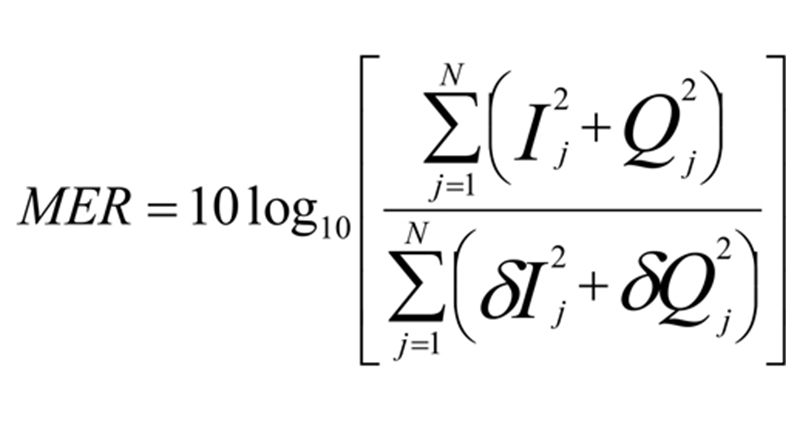
Modulation Error Ratio

By Ron Hranac – One of the most widely used metrics for characterizing the health of digital signals carried in cable networks is modulation error ratio (MER), or more specifically, receive modulation error ratio (RxMER).

Read More

Signal Leakage

By Ron Hranac – The metric of interest for leakage is its field strength in microvolts per meter (not just microvolts), which is typically measured with a dedicated signal leakage detector. The value of keeping the plant tight helps to avoid harmful interference to over-the-air users. An effective leakage monitoring and repair program also helps to reduce ingress problems, and ensures better network performance.

Read More