From Loose Tube to Ribbon
Unlocking Field Efficiency in Modern Fiber Deployments
As broadband networks expand deeper into neighborhoods, rural areas, and dense urban environments, the industry is undergoing a fundamental shift—not only in where fiber is deployed, but in how it is installed. Speed, consistency, and workforce scalability have emerged as the defining challenges of modern fiber construction, and while much of the focus remains on materials, architectures, and funding, one of the greatest opportunities lies in improving execution in the field.
Field ribbonizing as a productivity lever
A growing number of operators and contractors are recognizing a powerful solution in ribbonizing. By converting loose tube fiber into ribbon format in the field, broadband operators can dramatically increase technician efficiency. In fact, one operator shared that at a 72-fiber splice count, ribbonizing can reduce splicing time by approximately 30 minutes, highlighting the real-world impact on productivity. This approach is emerging as a practical way to bridge the gap between traditional fiber cable designs and the need for faster, more scalable deployment methods.
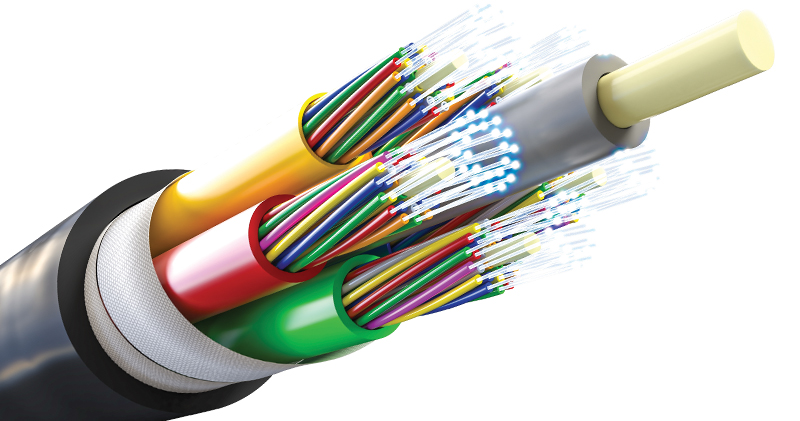
Most broadband access network fiber today is deployed using loose tube cable designs, where individual 250 µm fibers are organized within buffer tubes for flexibility and environmental protection, see Figure 2. While this design is highly effective for transport and durability, it introduces inefficiencies during installation, as fibers must be handled and spliced individually, with work performed sequentially one fiber at a time and productivity heavily dependent on technician skill and consistency. At the same time, the industry is under pressure to accelerate deployment timelines, reduce outage times, and maintain consistent quality across expanding workforces, creating a clear disconnect: Fiber is delivered in a format optimized for transport—but not for installation efficiency.

Figure 1. Ribbonizing.
How ribbonizing works and operational impact
Ribbonizing addresses this disconnect by enabling technicians to convert loose fibers into a structured ribbon format directly in the field, allowing a transition from single-fiber splicing to mass fusion splicing where multiple fibers—commonly 12 in broadband access networks—can be spliced simultaneously. As part of this process, fibers are arranged in sequence following industry standards such as ANSI/TIA-568 and TIA-598-C color codes to ensure proper alignment, identification, and splice accuracy. This shift from sequential to parallel work is where the true efficiency gains are realized. Rather than requiring changes to the cable itself, ribbonizing allows operators to maintain existing loose tube infrastructure while introducing high-efficiency workflows in the field and scaling productivity without redesigning network architecture. To support this process, field-ready ribbonizing kits are used to organize individual fibers into ribbon structures, enabling efficient preparation and seamless transition into stripping, cleaving, and mass fusion splicing.
The impact of ribbonizing loose tube fiber is best evaluated through its effect on field operations and splice throughput. In traditional single-fiber workflows, each splice is performed individually, with cycle times repeated dozens or hundreds of times per job, allowing minor inefficiencies to compound into significant delays. Ribbonized workflows enable mass fusion splicing, where multiple fibers are spliced in a single operation, improving fiber alignment, reducing handling complexity, and significantly increasing daily splice counts. Ribbonizing is not simply a technique—it is a productivity multiplier that, in high-fiber-count environments, drives faster project completion, reduces labor hours per build, improves restoration times, and accelerates subscriber activation.

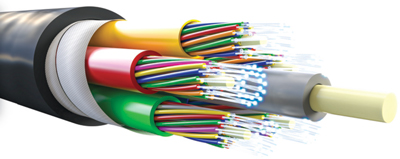
Figure 2. Loose tube fiber.
Methods, technician variability, and best-fit scenarios
Technician variability remains a persistent challenge in broadband deployment, as traditional splicing methods depend heavily on individual skill, manual precision, and experience with fiber preparation, often resulting in inconsistent splice quality, increased rework, and extended training cycles. Ribbonizing mitigates these issues by introducing structured fiber alignment, standardized preparation workflows, and reduced sensitivity to technician technique. By applying ribbonizing to loose tube fiber, operators can transition from craft-based execution to process-driven deployment, enabling faster technician onboarding, more predictable field performance, and scalable workforce expansion.
As ribbonizing adoption increases, two primary approaches are used in the field—glueless and glue-based ribbonizing—and both offer meaningful benefits depending on the application. Glueless ribbonizing uses mechanical guides to align fibers into a temporary ribbon structure, providing fast setup with no curing time, a clean process without adhesive, lower consumable cost, and greater flexibility when working with individual fibers, as technicians can easily access and rework a single fiber without impacting the group. However, ribbon stability can be limited during handling, results may vary by technician, and failed splices often require re-ribbonizing. In contrast, glue-based ribbonizing bonds fibers together to create a stable ribbon prior to splicing, delivering strong ribbon integrity, consistent alignment for stripping, cleaving, and splicing, and the ability to perform multiple splice attempts without re-ribbonizing, while reducing variability across technicians. Advances in tooling, such as automated ribbon stripping and precision holder systems, further improve consistency and repeatability. While glue-based methods require additional preparation time, material cost, and may require rework to separate individual fibers, many operators find the improved consistency and reduced rework outweigh these trade-offs, particularly in large-scale deployments—reinforcing that both approaches are effective when aligned to the right scenario.
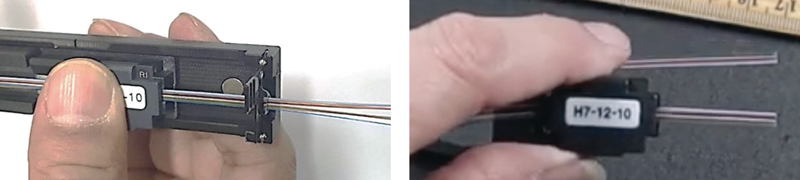
Figure 3. Ribbonizing kit example.
Ribbonizing loose tube fiber delivers the most value in high-density, high-efficiency environments, including FTTH feeder and distribution networks, HFC infrastructure, high-count splice and aggregation points, mid-span access and multi-dwelling unit (MDU) deployments, as well as data center and edge applications. As fiber counts continue to increase closer to the subscriber, the ability to efficiently manage and splice multiple fibers simultaneously becomes critical. Looking ahead, the future of fiber deployment will be defined by parallelization—doing more work in less time—and precision through standardization to reduce variability. Ribbonizing sits at the center of both trends, and when combined with advancements in ribbon fusion splicing platforms, hardened connectivity solutions, and pre-connectorized architectures, it enables a more engineered, repeatable, and scalable deployment model.


Figure 4. Splicer integrated automated ribbon stripping.
As the industry works to meet unprecedented demand for broadband expansion, success will depend not only on technology but on execution efficiency in the field. Ribbonizing loose tube fiber represents one of the most practical and immediate ways to improve productivity without requiring changes to underlying network designs, enabling operators and contractors to shift from sequential, labor-intensive processes to parallel, scalable workflows—one ribbon at a time.

Images provided by author courtesy of UCL Swift Americas, Shutterstock.