An Invisible Crisis in the Telecom Workforce
By Steve Harris
Drive down any road in the U.S. being trenched for fiber or glance at a new 5G small cell installation, and it’s clear: Our broadband infrastructure is growing at an unprecedented pace. Behind smart cities, edge computing, and artificial intelligence (AI)-driven networks are a rapidly expanding physical layer of fiber, coax, and wireless/Wi-Fi connectivity. However, beneath the momentum lies a silent crisis, the lack of a skilled telecommunication workforce ready to build, test, troubleshoot, and maintain these complex networks.
Despite historic investments in broadband infrastructure, projects are increasingly delayed not by funding or technology, but by skilled labor shortages. Telecommunication employers face a persistent paradox: While thousands of job roles remain unfilled, many recent graduates from trade schools or technical programs struggle to land employment due to a lack of field-ready skills and abilities. Employers are demanding hands-on experienced, certified professionals with skills—yet few new entrants are trained to meet today’s operational, competency, and compliance standards.
This disconnect reveals a critical need for alignment between education, workforce development, and our industry. Traditional models focused heavily on self-paced online theory must evolve to reflect the real-world environments and job role behaviors learners will encounter. Educational partners, colleges, training centers, workforce boards, and community-based programs have a powerful role to play in bridging this divide. By building a curriculum centered on job task analysis (e.g., career pathways), standards-based skills, heavy hands-on delivery, and industry expert instructors, our community can drive outcomes that matter: reduced deployment delays, improved technician productivity, reduce truck rolls, and build stronger regional skilled workforce pipelines.
A high-impact telecommunication education program starts with role-based learning career pathways. Whether the focus is on broadband fiber installation, wireless infrastructure, field engineering, data center, or structured cabling, programs should be designed to align with actual job role and professional credentialing competencies. Hands-on instruction should be mapped to national and international standards including TIA/EIA, BICSI, ITU-T, IEC, SCTE, and NEC, ensuring that learners graduate with credentials that validate both their knowledge and hands-on skills, while remaining vendor-neutral and widely recognized across the globe.
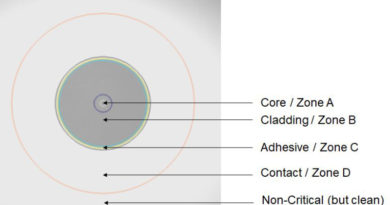
Next, programs like fiber must prioritize hands-on mastery of the industry’s core technical demands, what some call the “Big Three” of fiber: splicing, testing, and enclosure preparation. For example, Learning Alliance Corporation, or LAC, established key credential partnerships on the “Big Three” with Sumitomo Electric Lightwave, Preformed Line Products (PLP), and Viavi Solutions. Learners should become fluent in core/clad alignment fusion splicing, working with real field equipment to achieve consistent low-loss targets (e.g., .01 dB). Testing skills should include the use of an optical power meter (OPM) and optical time domain reflectometer (OTDR) for budget analysis. Learners should also be able to validate traces and optical loss budgets across common deployment wavelengths such as 1310 nm, 1490 nm, 1550 nm, 1577 nm, and 1625 nm. Enclosure craft should cover dome and inline splice closures, including a higher-density fiber configuration like a 288-count, with strict adherence to bend radius tolerances for ITU G.652.D and ITU G.657.B3 fibers. These capabilities support long-haul, fiber-to-the-x (FTTx), and enterprise deployments (e.g., data center).
Equally important is a network’s documentation and compliance. Programs should teach structured labeling practices in line with ANSI/TIA-606-D, ensure familiarity with inspection and cleaning standards such as IEC 61300-3-35:2022, and include cloud-based digital archiving test results and software-based fiber maps. This kind of documentation discipline not only prepares learners for field roles—it directly reduces rework, truck rolls, and costly service delays. In today’s broadband workforce, knowing how to spice isn’t enough—technicians must know how to report, document, and deliver their work against service-level agreement (SLA) expectations.
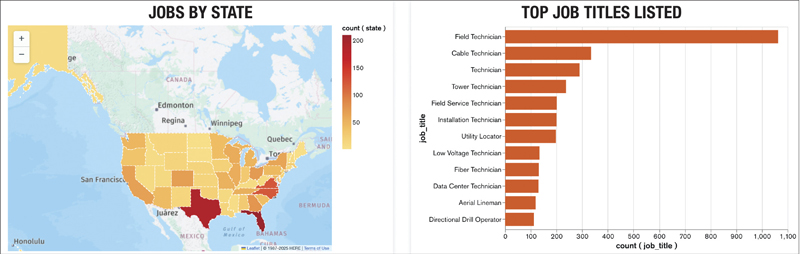
Figure 1. Learning Alliance Unify.ATS Real-Time Job Information*
To further drive return on investment (ROI), education providers with expertise in telecommunications should embed workforce services and employer engagement into the learning career pathway. Resume coaching, interview preparation, and job-matching platforms can help learners transition smoothly into our workforce. Formal apprenticeships, particularly those that support veterans using G.I. Bill® benefits, offer a valuable on-ramp for on-the-job (OJT) experience. By maintaining close connections with regional employers and aligning training to their specific deployment goals or funded projects, institutions can increase placement rates, accelerate field readiness, and meet grant or contract deliverables.
Accelerated models such as mobile fiber bootcamps and on-site employer training have also proven highly effective. These programs—ranging from 40 to 80 hours—emphasize high-intensity hands-on training and skill based professional certifications tailored to deployment conditions. When delivered in partnership with local colleges or workforce boards, mobile deployments help expand access, support underserved regions, and allow for rapid response to shifting labor demands. Learning institutions that use veteran-led instruction, cross-sector collaboration, and data-driven content updates further enhance the relevance and impact of these programs. Our veterans can create a unique classroom culture, one built on camaraderie, respect, and accountability.

Figure 2. The Big Three Fiber Skills – Splicing, OTDR, and Enclosures.
Images provided by author and courtesy of Sumitomo Electric Lightwave, PLP, and Viavi Solutions.
As telecommunication networks continue evolving to support artificial intelligence (AI), edge computing, 10G PON, and a future 6G backbone, the need for professional certified technicians rooted in verifiable hands-on skills will only intensify. This is not just a technology issue, it’s a workforce development imperative. Closing the skills gap in telecommunications and information technology (IT) requires educational partners to think like workforce architects: aligning curriculum with employer key performance indicators (KPIs), competency focusing on hands-on performance, and continuously validating outcomes through job placement, wage growth, and employer satisfaction.
The telecommunication industry’s expansion depends on more than fiber and spectrum—it depends on people. By building a new model of telecommunication education centered on a framework with field readiness, standards alignment, measurable results, and a strong employer connection educational providers can deliver not just training, but transformation. Together, we can close the workforce skills gap, increase broadband deployment speed, and create career pathways that support economic mobility and digital equity for all.
*https://www.mylearningalliance.com/where-are-the-jobs
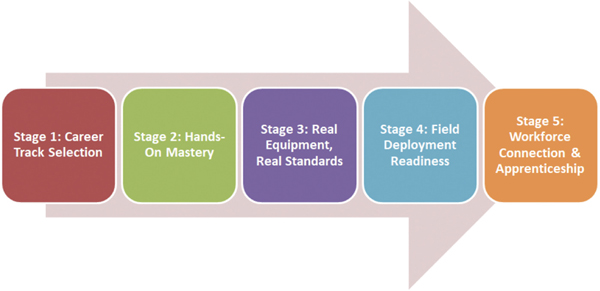
Figure 3. The Field-Ready Career Pathway Framework.

Steven Harris,
SVP, Learning Alliance Corp/
Founder, Harris DigiTech
steve.harris@harrisdigitech.com
Steve Harris is a globally recognized broadband leader with 30+ years as an entrepreneur, corporate executive, and professor. Pioneering workforce skills development, he’s a FOA/Cisco/CWNP instructor, published author, and patent holder. Known for strategic partnerships and closing the digital skills gap, he actively supports industry organizations and trade events.
Tate Logsdon-Hurst also contributed to this article. Tate is a Navy veteran and currently teaches fiber optics and telecommunications at Learning Alliance Corporation in Tampa, FL. After serving seven years in the United States Navy, he returned to Kentucky and attended Eastern Kentucky University. Following the pandemic, he utilized GI Bill benefits to complete Broadband Digital Installer program at LAC in Tampa, Florida.
Images provided by author, Shutterstock.