DOCSIS PNM Meets AI Vibe Coding
Proactive network maintenance (PNM) has always been driven by data. From the early days of pre-equalization analysis to today’s use of full band capture, OFDM(A) channel metrics, and upstream triggered spectrum capture, the value of PNM has come from turning raw DOCSIS measurements into actionable insight.
In parallel, the software industry is undergoing a significant shift driven by AI-assisted development. A growing trend often referred to as “vibe coding” describes the use of AI coding agents that generate applications directly from natural language prompts. What once required weeks of development can now, in some cases, be produced in days—or even hours.
For those working in DOCSIS PNM, this raises an interesting question: Can AI coding agents be used to build real PNM applications, and what does that mean for engineers and domain experts?
From prompt to PNM application
In practice, AI coding agents are already capable of generating functional PNM tools. Using carefully structured prompts, it is possible to create applications that collect DOCSIS pre-equalization data, process tap coefficients, calculate echo and micro-reflection metrics, and render meaningful visualizations.
Using real examples, prototypes have been generated in a matter of hours rather than weeks. In some cases, a first usable version emerged after only a few iterative prompt-and-refine cycles. That speed is difficult to ignore.
Figure 1 shows an example of a pre-equalization analysis application generated using an AI coding agent. This application collects and decodes tap coefficients, identifies the main tap, highlights echoes, and calculates key metrics. An initial working prototype was developed in less than two hours, demonstrating how quickly functional tools can now be produced.
Pre-equalization: Where assumptions matter
Developing the application shown in Figure 1 highlighted one of the first places where the limitations of vibe coding become visible. While an AI agent can generate code using SNMP to collect data, parse tap coefficients and draw charts, it has no inherent understanding of how those taps should be interpreted.
If a prompt does not clearly specify how taps are indexed, how the main tap is defined, or how energy-based metrics are computed, the resulting application may look correct while producing misleading results. In several development iterations, correcting these issues required refining the prompt itself—adding DOCSIS-specific assumptions that experienced engineers typically take for granted. This reinforces a key lesson of AI-driven development: The prompt effectively becomes the specification.
Full band capture: Faster results, familiar pitfalls
Full band capture (FBC) spectrum data lends itself well to visualization, and modern AI models are comfortable creating charts showing various traces.
Figure 2 shows an example of an application that collects and visualizes FBC data, generated using an AI coding agent. In this case, a spectrum chart including a smoothed trace as well as a separate chart with individual channel power was produced in about a couple of hours.
While the application provides immediate visibility into downstream impairments without requiring manual spectrum measurements in the field, the challenge with FBC is not rendering the spectrum but interpreting it.
As discussed in SCTE 280 2022 Understanding and Troubleshooting Cable RF Spectrum, FBC data can be used to identify several impairments commonly seen in the downstream spectrum. While spectral impairment detection is something a technician can do simply by looking at the spectrum trace, this is more challenging for an AI coding agent to achieve especially when multiple impairments are present in a single capture. Without careful guidance, or by providing a large amount of labeled sample data to train against, AI-generated tools can incorrectly flag impairments, or miss the operational significance of roll-off, or the impact of environmental effects. Domain expertise remains critical in defining what matters.
OFDM RxMER per subcarrier: Seeing what spectrum cannot
With the introduction of DOCSIS 3.1, PNM expanded beyond pre-equalization and spectrum capture to include detailed OFDM(A) measurements. One of the most powerful of these is RxMER per subcarrier, which provides visibility into how the physical plant and external interference impacts each subcarrier in the OFDM(A) channel.
Figure 3 shows an example of an AI-generated application that collects and visualizes RxMER per subcarrier data. The data shows two OFDM channels configured on this downstream.
This application adds an additional complexity for the AI coding agent. In the previous example SNMP was used to request and retrieve the data. In this case the application requests the data using SNMP, but it must handle the data being returned via a TFTP upload from the cable modem for each OFDM channel.
This view makes it possible to see localized interference, roll-off effects at the channel edges, and ripple patterns caused by echoes or plant impairments. Building upon the previous examples, an initial RxMER analysis tool was developed in a couple of hours by explicitly prompting the AI agent with the format and structure of the data uploaded and details about how it should be interpreted and visualized. This includes adding computed metric indicators like the average RxMER and standard deviation bounds.
As with the previous examples, the challenge is not displaying the data but interpreting it correctly. Without domain guidance, an AI-generated tool may treat all RxMER variation as equivalent, failing to distinguish between configuration artifacts and true plant issues. When properly guided, RxMER per subcarrier analysis becomes a powerful complement to pre-equalization and spectrum-based tools.
Upstream triggered spectrum capture: Specifications meet reality
Upstream triggered spectrum capture (UTSC) introduces yet another layer of complexity. While the DOCSIS and R-PHY specifications define UTSC behavior, real deployments include vendor-specific behavior, partial implementations, and operational constraints that are not always documented or publicly available to an AI agent. Additionally, a different transport protocol is introduced when collecting data in an R-PHY environment. In this case raw spectrum data is streamed at a high rate directly from the RPD. The application generated must therefore handle performance requirements as well as implement a custom protocol stack.
Figure 4 shows an example of an upstream triggered spectrum capture application developed using AI-assisted coding. An initial working version was completed in a few hours with subsequent refinements required to add cross platform support across MacOS, Windows, and Linux. This final step did require more handholding of the AI agent but ultimately was achieved without having to provide any code or make manual edits.
Comparing AI coding agents
Not all AI coding agents behave the same, and this becomes quickly apparent when building applications. ChatGPT, Gemini, and Claude Code each demonstrate different strengths and weaknesses. Some excel at generating clean, readable code, others at reasoning through complex specifications, and others at refactoring or debugging.
An effective workflow emerged where one AI agent is used to refine or expand prompts before passing them to another agent for implementation. This multi-agent approach often identifies missing assumptions early and reduces the number of revision cycles needed to achieve the desired behavior.
One area where all the agents excelled was in documenting the applications developed, both using internal code comments as well as creating architecture and design documentation. For many software engineers this can be the least favorite part of the development process so is an added benefit. Leveraging this code review and documentation capability, they all performed well at generating design and implementation documentation from existing code. This is extremely useful in maintaining legacy applications where the original developers may no longer be available.
Why software engineering still matters
Despite the productivity gains demonstrated in Figures 1 through 4, vibe coding does not eliminate the need for software engineering. Engineers are still required to validate algorithms, test behavior against real network conditions, handle scale and performance, and integrate with existing operational systems.
Equally important is domain expertise. DOCSIS PNM sits at the intersection of RF physics, protocol specifications, and operational reality. An application that “mostly works” can be more dangerous than one that clearly fails.
Conclusion: From rapid prototypes to production systems
The examples shown in this article demonstrate that AI coding agents can dramatically accelerate the development of PNM applications. As illustrated in development of the applications presented, it is now possible to rapidly build tools that collect, process, and visualize pre-equalization data, full band capture spectrum, RxMER per subcarrier metrics, and upstream triggered spectrum captures.
The applications were developed in the order shown and built upon previous iterations. The AI agent’s context therefore maintained knowledge around areas that initially caused problems like specific SNMP library implementations, or overall user interface layout and design requirements. In total, development was completed over a couple of days including test time.
However, moving from a working prototype, or simplified application like these to a production-ready PNM system remains a substantial effort. A commercial-grade application must be capable of collecting data at scale across hundreds of thousands or millions of devices, integrate with back-office systems, conform to operator security guidelines, maintain historical data sets, and perform analysis across the network and over time. These requirements introduce challenges around scalability, reliability, security, and long-term maintainability that extend well beyond visualization and basic analytics.
Where AI-assisted development truly shines is in enabling engineers and domain experts to quickly analyze data, explore new ideas, and investigate network behavior without being bogged down in the mechanics of implementation or the repetitive cycle of writing and debugging boilerplate code. This represents a significant productivity gain, particularly in a domain as complex as DOCSIS PNM.
At the same time, claims that AI eliminates the need for software developers are overstated. AI coding agents are best viewed as development assistants that amplify productivity rather than replace expertise. Software development is increasingly about software engineering, system design, and domain understanding. In PNM, where accurate interpretation matters, those skills remain vital.
Used thoughtfully, AI coding agents can help the industry move faster without sacrificing correctness. The responsibility lies in combining these new tools with the engineering discipline and domain knowledge that have always been at the core of effective proactive network maintenance.
For any questions on the topics discussed in this article, or to schedule a demonstration of Akleza’s comprehensive PNM product suite, CableDiag, including our UTSC based return path monitor application, CableDiagUA+, contact info@akleza.com, or call 1-855-4-AKLEZA.
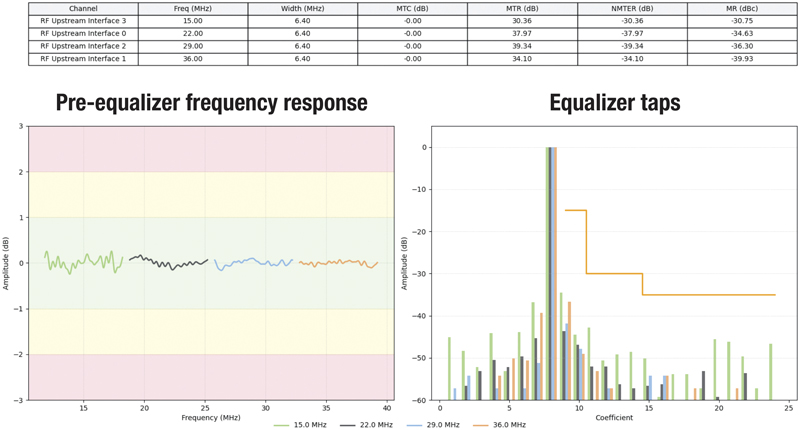
Figure 1. Pre-equalization analysis application.
Copyright © 2026 Akleza, Inc. All rights reserved.
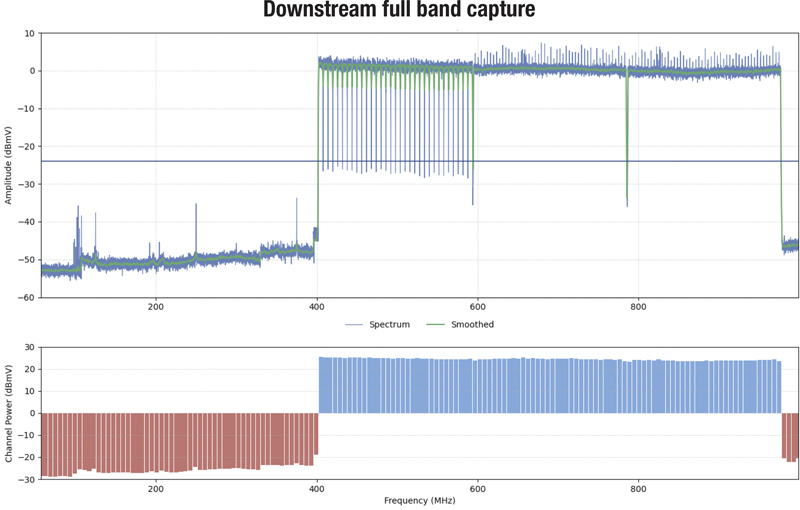 Figure 2. Full band capture application.
Copyright © 2026 Akleza, Inc. All rights reserved.
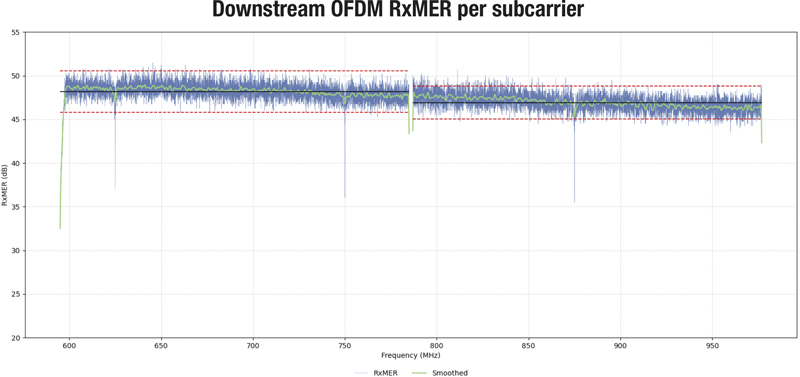
Figure 3. OFDM RxMER per subcarrier analysis application.
Copyright © 2026 Akleza, Inc. All rights reserved.
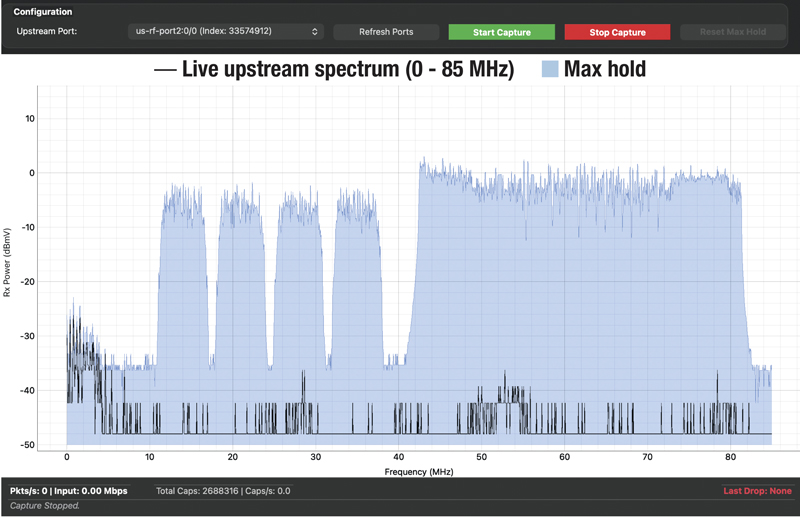
Figure 4. Upstream triggered spectrum capture application.
Copyright © 2026 Akleza, Inc. All rights reserved.

Images provided by author, Shutterstock