Network Reliability
The Next Engineering Challenge
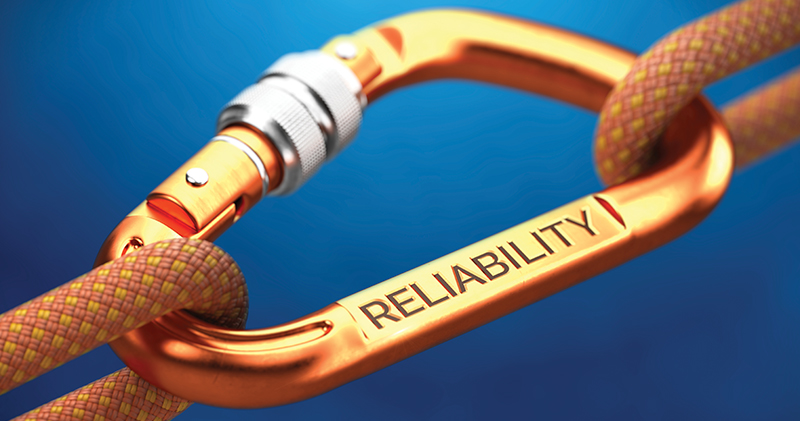
In reflecting back on 2025 and the shifts in our industry, it became obvious that the focus is now very different than it was over the previous several decades—moving from using technology developments to expand services and deliver faster speeds to instead creating greater reliability and operational stability. This article examines that shift and what it means for our futures as engineering teams in the cable industry.
A historical perspective
When I joined Scientific Atlanta in 1999, I could not have envisioned the growth and development of cable telecommunications that I would witness and in which I would play a part. Our team was working on development of cutting-edge amplifiers and line extenders to operate the HFC plant at frequencies up to 870 MHz, new analog nodes and associated transmitters and receivers, and taps that operated up to 1 GHz. Fast forward a few years and DOCSIS began its long journey toward being the king of wired connectivity. Over the following decades, customers demanded more and more speed to enable advanced services and applications, and DOCSIS 3.1, various diplexer splits, and remote PHY were developed to increase capacity and more efficiently use spectrum. Now, in 2025, we have reached a point where the vast majority of our customers have far more speed than they can use, even with multiple users within a household consuming data on a multitude of devices. So, the question becomes, “what’s next?”
Emerging challenges for engineering teams
Fortunately for engineering teams in our industry, there are always new challenges. While those challenges may look different from decades past, there are tons of new and interesting problems to solve. While it is true that there are still newer versions of DOCSIS and the continued ability to expand spectrum, the primary emerging new area of innovation is centered around reliable and stable operation of our networks.
The competition landscape
Why is this the case? We are in a mature technology space, which is now facing unprecedented multi-front competition. There are limited cable operator budgets for network upgrade cycles. With that, it is now more important than ever to be able to have efficient operations and maintenance and to offer the very best quality at the lowest cost possible. Where can engineering teams best contribute in this environment? The knowledge of how HFC networks work, the physics involved in data transmission and reception, and the meaning of the various pieces of telemetry gained through years of designing and deploying new products can now be harnessed and used in new and exciting ways to gain better insight and protect customer experience.
Reliability initiatives at Cox
How? Here are a few recent examples of reliability initiatives that we have undertaken at Cox.
For the past several years, many of the features we have worked with our cable modem termination system (CMTS) vendors to develop involve faster detection and mitigation of issues caused at the physical layer—whether through improved performance in these areas or more configuration controls over how to react to these events.
Upstream solutions
In the upstream, these have involved creative solutions around how to respond to ingress with modulation changes, how to measure those changes, alert external systems, provide visibility into transient issues, and how to detect and avoid spectrum in which these issues are occurring. We have also refined the balance that allows us to respond quickly to noise but be less aggressive in returning to higher modulation orders in order to minimize packet loss and enhance customer experience. In addition, we have found configuration and operational options for dealing with over-the-air television broadcast signals in the very high frequency (VHF) band that fall within our mid-split and high-split return spectrum.
Downstream challenges
Concordantly, in the downstream spectrum, we now have more potential noise and ingress sources than ever before: Internet of Things (IoT) devices, smart utility meters, mobile phone, and fixed wireless access points. Everywhere you look, there is something new on the airwaves that has potential to get into any break in the shielding of our plant. In reacting to those new potential impairments, we have made changes to make our channels more robust, including reducing modulation order or avoiding use of specific spectrum regions, in designing profiles that allow orthogonal frequency division multiplexing (OFDM) channels to continue to operate in the presence of these interfering signals. We have worked with our CMTS vendors to optimize the balance between CPU protection and being able to provide the most capacity for individual modems.
Addressing overall performance issues
For both downstream and upstream, we have worked to optimize transmit and receive levels for best performance, and we have sought to address issues related to seasonal temperature swings beyond the capability of the automatic gain control (AGC) circuitry embedded in amplifiers.
The role of telemetry in enhancing reliability
These examples of reliability initiatives that have taken place at Cox in the past year are simply scratching the surface of what can be accomplished by the engineering talent in our industry, as this shift in the primary focus continues to take place from extension of capacity to enhancement of customer experience—and it’s an exciting time to be a part of that shift.
We are entering an era in which we will have more telemetry than ever before. Numerous proactive network maintenance (PNM) measurements have been defined in the latest CableLabs specifications and are supported by network devices. There is more computing power in both the remote PHY nodes and in the customer premises equipment (CPE). However, the data we will collect is no longer at just the endpoints of the network. Newer amplifiers, whether using the DOCSIS 4.0 unified chipset or any flavor of DOCSIS, HMS, or LoRaWAN transponders, will give us insight into localization and characterization of plant issues. All of this data can be very useful in identifying issues and determining the scale of those issues.
Challenges of data utilization
However, data alone, even paired with analysis by machine learning or artificial intelligence, does not find solutions, or even workarounds, to the problems. Nor is it capable of evaluating multiple potential solutions and identifying the trade-offs with each, as it lacks context and knowledge of the interactions and physical underpinnings of the HFC network. This is where the engineering challenge and the value of our knowledge begins.
Creative solutions to impairments
How do we think about making things better for our customers in the presence of impairments? Engineers who are well-versed in HFC operation and the underlying dynamics of the system are able to find new methods of detection, sift through metrics to find the most meaningful data, identify the nature of anomalies and the underlying physical mechanisms involved, find creative solutions to mitigate them, perform the necessary tradeoffs and risk analysis, and determine the success criteria to watch for in the resulting metrics.
Workforce development and vendor innovation
When the engineering “magic” runs out and the root cause impairments must be addressed, efficient and timely approaches to educating the technician workforce on what to look for, tips and tricks for finding and resolving these issues, are also key. Likewise, vendors who design equipment can be creative and differentiate themselves by including features, whether software or hardware-based, that make monitoring more straightforward or provide some synthesis of multiple data elements to provide alerts of specific anomalies. In the mature technology space we occupy, these are the areas in which engineering innovation can provide the most valuable contributions.
Conclusion: Embracing the future
In conclusion, all of the knowledge that our engineering teams have learned over the years is critical to the future of our industry. Once again, we are faced with new types of exciting challenges and new ways to apply our expertise that are meaningful for our customers and our companies. We are ready to boldly go forward and rise to this challenge.

Chris Topazi
Principal Architect
chris.topazi@cox.com
Cox Communications, Inc. Chris Topazi is a Principal Architect at Cox Communications, where he is responsible for testing and development of deployment guidelines for DOCSIS® 3.1/4.0 technology. He has worked in the cable telecommunications industry for more than 25 years, including the past 12 years at Cox. Prior to joining the Cox Communications team, Chris designed and developed products for both headend and outside plant applications at Scientific Atlanta and Cisco..
Images, Shutterstock