Keeping Innovation in Motion
Policy for the Next Generation of Broadband
As I prepare to end my tenure as President & CEO of NCTA, I find myself reflecting on the extraordinary pace of innovation that has defined this industry and the public policies that have either enabled or constrained its progress. Throughout my public service and advocacy career, one principle has guided me: When regulatory frameworks are thoughtfully designed to encourage private investment and empower technologists, innovation thrives. America leads.
That principle matters more than ever as we enter a new era of broadband. Today, we are focused not just on speed and reliability, but on delivering scalable, resilient connectivity that supports everything from smart infrastructure to generative AI. The opportunities ahead are significant but realizing them will depend on pragmatic spectrum policy and a renewed understanding of broadband’s role in our economic and national security future.
The future of spectrum is shared
Traditional “clear and auction” models for spectrum allocation are no longer practical. Consider the lower 3 GHz band, which could take decades and over $100 billion to fully clear. In that time, America could fall behind in wireless innovation and infrastructure leadership.
A better path is shared spectrum. Wi-Fi and Citizens Broadband Radio Service (CBRS) have shown that commercial and government users can operate side by side without conflict. Wi-Fi now carries more data than all mobile networks combined, powering everything from telehealth to education. CBRS supports hundreds of thousands of private 5G and LTE deployments in campuses, factories, ports, and rural communities.
These aren’t experiments. These are proven, scalable systems that deliver real connectivity. Shared spectrum allows for faster deployment, lower costs, and better stewardship of a limited national resource. It reflects what modern spectrum management should be.
A call to policymakers: Support a smarter spectrum strategy
To keep broadband innovation moving forward, we encourage policymakers to take several key steps:
- Open additional unlicensed spectrum in the 7 GHz band to support next-generation Wi-Fi and dense device environments.
- Advance shared-licensed models in mid-band spectrum, especially in the lower 3 GHz range, which can support both government and commercial use.
- Modernize FCC oversight to support dynamic spectrum access and ensure federal agencies have tools and funding to coordinate spectrum use efficiently.
These actions will accelerate connectivity, encourage infrastructure investment, and maintain U.S. leadership in broadband technology.
TechExpo: Bringing policy to life in Washington
We are excited to bring these ideas to life at this year’s SCTE TechExpo, taking place September 29 through October 1 in Washington, D.C. For the first time, NCTA is producing a 10,000-square-foot Broadband Innovation Stage and Policy Experience designed to showcase the relationship between public policy and real-world innovation.
This immersive space will take visitors through the technologies, networks, and stories that define our industry. Through a series of short, high-impact conversations, attendees will hear directly from government officials and industry technologists about how effective policy leads to scalable, future-ready broadband infrastructure.
This moment presents a unique opportunity to remind policymakers that the broadband industry has long been a driver of economic growth and connectivity. From the earliest DOCSIS® milestones to today’s gigabit networks, our ability to solve complex challenges has never depended on digging up streets or doubling consumer costs. It has depended on vision, engineering, and trust in innovation.
A legacy of progress and the work ahead
I remain confident in this industry’s capacity to evolve, scale, and serve. Broadband is no longer a luxury; it is a necessity that underpins commerce, education, health care, and civic participation. The systems and technologies that support it must continue to grow, and that growth must be guided by smart policy choices that reward investment and encourage creativity.
Because when innovation is supported by sound policy and shared purpose, progress is not only possible, it is inevitable.

Michael K. Powell,
President and CEO, NCTA –
The Internet & Television Association
Michael K. Powell is the former chairman of the Federal Communications Commission (FCC). During his tenure as FCC chair, Chairman Powell oversaw the rapid transformation of communications markets into the digital age. In his current role as President & CEO of NCTA – The Internet & Television Association, Mr. Powell leads one of the largest trade associations in Washington, D.C., representing the communications and content industries.
Learn more at – ncta.com
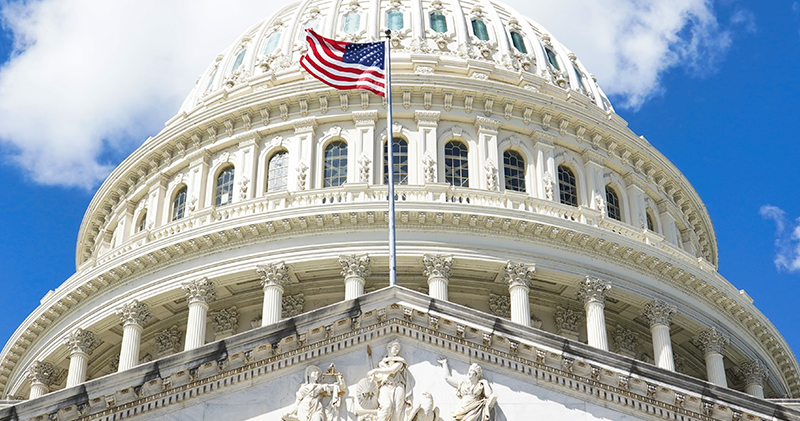
Image: Editorial credit: Adam McCullough / Shutterstock.com